Uncategorized
Marty Robbins’ “Am I That Easy to Forget” Redefined Heartbreak Ballads and Cemented His Cross-Genre Brilliance in the Late 1960s
Released in 1969, Marty Robbins’ rendition of “Am I That Easy to Forget” offered a hauntingly vulnerable performance that resonated with listeners far beyond country’s traditional borders.
While the song had already enjoyed earlier success through versions by Carl Belew and Engelbert Humperdinck, Robbins brought an emotionally nuanced delivery that transformed the track into a transcendent experience.
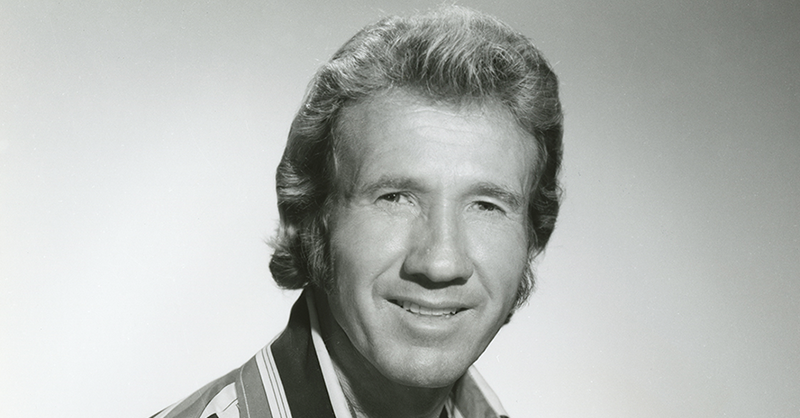
Its melancholic tone, mixed with Robbins’ smooth vocal phrasing, gave the song new weight, pushing it into the Top 10 on country charts and finding surprising resonance with adult contemporary audiences.
This version became a touchstone for heartbreak ballads at the tail end of the decade.
By the time Robbins recorded this ballad, he was already a versatile and widely celebrated artist.
Born in 1925 in Glendale, Arizona, Robbins had climbed the ladder from small-town radio appearances to becoming a national star by the mid-1950s.
Known for his uncanny ability to navigate Western ballads, rockabilly tunes, and romantic standards, Robbins defied categorization.
Hits like “El Paso” and “A White Sport Coat (And a Pink Carnation)” showcased his storytelling prowess, but it was songs like “Am I That Easy to Forget” that reminded audiences of his deeply emotive undercurrent.
Though Marty didn’t write the song—it was penned by Carl Belew and W.S. Stevenson—the selection was anything but arbitrary.
Robbins had a gift for identifying lyrics that matched his own life’s undercurrents, and many believe he gravitated toward the song during a period of personal reflection.
His version is slower and more plaintive than the others, imbued with an aching sense of resignation.
There’s a story, perhaps apocryphal, that Robbins requested multiple takes not to perfect the pitch but to find the most emotionally convincing delivery—he wanted the listener to feel like they were overhearing a man losing the love of his life.
The recording process reflected Robbins’ typical perfectionism.
Produced in Nashville under Columbia Records, the track featured a delicate orchestral arrangement rather than the steel guitars common in his earlier hits.
The production leaned heavily on strings and piano, allowing Robbins’ voice to sit squarely at the center of the sonic palette.
His phrasing—gentle, almost whisper-soft at times—drew the listener inward.
The restraint of the arrangement emphasized the emotional gravity, making the sorrow in the lyrics feel profoundly intimate.
Upon release, Robbins’ version climbed to No. 7 on the Billboard Hot Country Singles chart.
Though Engelbert Humperdinck’s 1967 version had already made waves internationally, Robbins’ interpretation was uniquely embraced by the country music community and reaffirmed his status as one of the genre’s most adaptable vocalists.
While it didn’t cross over to pop charts in a major way, it found significant radio play in adult contemporary formats, proving that Robbins’ appeal extended well beyond traditional country audiences.
Culturally, the song played a crucial role in softening the boundaries between country and pop.
At a time when genres were becoming increasingly siloed, Robbins reminded audiences that emotional sincerity and lyrical craftsmanship transcended musical labels.
His cover became a reference point for country artists looking to dabble in broader sonic textures without alienating their base.
It was a quiet revolution, and Robbins, with his velvet tone and understated conviction, was its soft-spoken general.