Uncategorized
The Song Motown Didn’t Want Released — Until It Changed Music Forever
In 1970, one of the biggest stars at Motown wanted to release a song that sounded nothing like the music that had made him famous.
It wasn’t a typical love song.
It wasn’t designed for the dance floor.
And it wasn’t the kind of record the label’s executives were expecting from him.
It was a song about war, violence, poverty, division, and the feeling that something had gone terribly wrong in America.
And the people in charge of the record company didn’t want it released.
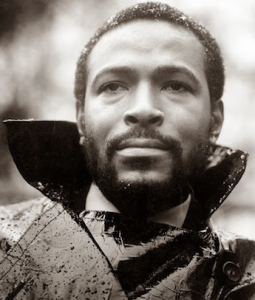
The story actually began with Renaldo “Obie” Benson, a member of the Four Tops.
While touring in California in 1969, Benson witnessed police confronting anti-war protesters at Berkeley’s People’s Park. The violence stayed with him, and he began wondering what was happening to the country around him.
Benson and songwriter Al Cleveland began turning those thoughts into a song.
But the song was considered too political.
The Four Tops didn’t record it.
Joan Baez also passed on it.
Eventually, the song reached Marvin Gaye.
And Gaye immediately understood what it could become.
His own life had given him another reason to connect with the subject. His brother had served in Vietnam, and Gaye had become increasingly disturbed by the violence and social turmoil surrounding him. At the same time, he was growing frustrated with the kind of music Motown expected him to make.
Gaye didn’t simply record the song.
He transformed it.
He added his own ideas to the lyrics and melody, turning the original concept into something much more personal and emotional.
Instead of sounding like an angry political speech, it sounded almost like a conversation.
A plea.
A prayer.
A question directed at an increasingly divided world.
Then came the biggest problem.
Motown founder Berry Gordy didn’t want to release it.
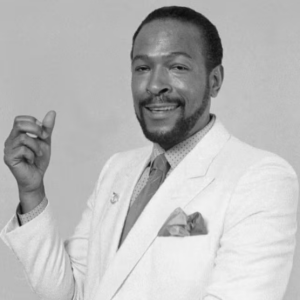
Gordy reportedly considered the song too political and too far removed from the commercial Motown sound. He wasn’t convinced that radio stations would embrace it, and he worried about what it could do to Gaye’s career.
But Gaye refused to back down.
He effectively told Motown that he wouldn’t record anything else until the company released the song.
The standoff lasted for months.
Then, in January 1971, the song finally escaped the walls of Motown.
The results shocked everyone.
Radio stations embraced it.
The public embraced it.
The first pressing sold out almost immediately, and the single eventually sold millions of copies.
The song reached No. 2 on the Billboard Hot 100 and became one of the defining recordings of Gaye’s career.
But its importance went far beyond its chart position.
It changed what a Motown record could be.
Gaye had taken the polished sound associated with the label and used it to talk about subjects that mainstream pop music rarely addressed so directly.
War.
Racism.
Poverty.
Violence.
Environmental destruction.
And the desperate desire for people to understand one another.
The success of the single opened the door for the album that followed.
Released in May 1971, What’s Going On became a concept album exploring many of the same social and spiritual concerns. The Library of Congress later selected the album for preservation in the National Recording Registry, recognizing its lasting cultural and musical significance.
More than half a century later, the record is still regarded as one of the most influential works in popular music.
And that’s what makes the original story so remarkable.
The song that executives thought was too risky became a massive success.
The record that almost never reached the public became a landmark.
And the artist who was told, in effect, “don’t release this,” refused to let the song disappear.
Sometimes music history is made because everyone agrees.
And sometimes it’s made because one person refuses to take no for an answer.
That’s what happened here.
A song Motown nearly kept behind closed doors became a voice for an entire generation.
And more than 50 years later, its question still feels just as powerful:
What’s going on?