Uncategorized
The Song That Almost Never Made It to the Radio
In 1966, a beautiful new love song was being created in California.
It sounded warm.
It sounded innocent.
It sounded like something that should have been an instant classic.
But there was one problem.
The people making it were worried that radio stations might refuse to play it.
Not because of the melody.
Not because of the lyrics.
Not because it was offensive.
Because of one word in the title.
That word was “God.”
At the time, putting the word into the title of a mainstream pop song was considered risky. Brian Wilson and lyricist Tony Asher genuinely worried that radio stations might reject the record because of it. Asher later recalled that they considered changing it, but nothing else sounded right.
And they decided to keep it.
That decision gave the world “God Only Knows.”
The song was written by Brian Wilson and Tony Asher for the 1966 album Pet Sounds. Unlike many of the band’s earlier songs about surfing, cars, and California youth, this was something completely different.
It was intimate.
Vulnerable.
Almost spiritual.
And its opening was unusual too.
Instead of beginning with a confident declaration of eternal love, it begins with uncertainty — the possibility that love might someday disappear.
That vulnerability is exactly what makes the song so powerful.
It’s not simply saying, I love you.
It’s asking what life would mean if that love were suddenly gone.
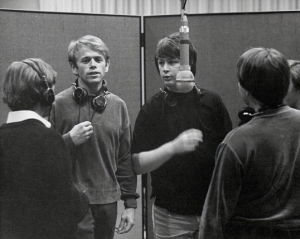
Wilson and Asher reportedly wrote the song remarkably quickly, but the recording itself was anything but simple. Wilson constructed an elaborate arrangement using an unusual combination of instruments, including French horn, harpsichord, strings, percussion and multiple layers of vocals.
And then came the voice.
The lead vocal was performed by Carl Wilson, Brian’s younger brother.
His gentle delivery gave the song a vulnerability that perfectly matched the lyrics. The Beach Boys’ harmonies were then layered around him, creating that almost otherworldly sound that makes the recording instantly recognizable.
But the song’s journey wasn’t immediately smooth.
Pet Sounds itself was initially a commercial disappointment in the United States compared with the band’s earlier blockbuster records. The album represented such a dramatic artistic change that some listeners didn’t know what to make of it.
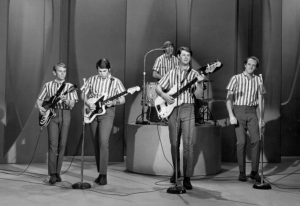
And when “God Only Knows” was released as the B-side of “Wouldn’t It Be Nice” in America, the record company clearly wasn’t treating it like an obvious pop monster. In Britain, however, the song was promoted as the A-side and climbed much higher, reaching No. 2.
Over time, everything changed.
The song that had seemed risky became one of the most admired compositions in popular music.
Its influence spread far beyond the Beach Boys.
Its sophisticated harmonies and unusual arrangement helped demonstrate how far pop music could go when the recording studio itself became part of the creative process. The Library of Congress notes that Pet Sounds helped inspire the Beatles’ later studio experimentation on Sgt. Pepper.
And perhaps the strangest part is that the song’s biggest risk turned out to be almost meaningless.
That supposedly dangerous word didn’t destroy the song.
It became part of what made it unforgettable.
More than half a century later, “God Only Knows” doesn’t sound controversial.
It sounds timeless.
The strange instruments still work.
The harmonies still sound beautiful.
And Carl Wilson’s voice still carries that same fragile emotion.
What once seemed like a gamble became one of the most enduring love songs ever recorded.
Sometimes music history changes because someone makes a huge, dramatic decision.
And sometimes it changes because someone simply refuses to remove one word.