Uncategorized
The Story Behind One of the Most Beloved Love Songs Ever Recorded
There are songs that make you think of a person.
Then there are songs that seem to make the entire world think of someone they love.
“My Girl” is one of those songs.
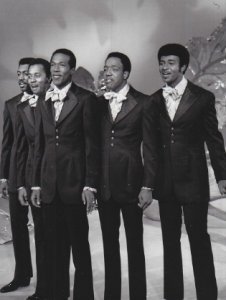
Released in 1964 by The Temptations, it became one of the most recognizable love songs of the 1960s. The opening bass line alone is enough to transport millions of listeners back to another time.
But the story behind it begins with a very specific person.
The song was written by Smokey Robinson and Ronald White, both members of the Motown family.
They were looking for a song that would give another member of The Temptations, David Ruffin, an opportunity to take the lead.
And they found their inspiration partly in Ruffin’s relationship with his girlfriend.
Robinson and White began putting the song together, building around a simple but powerful idea: what does it feel like when having the person you love makes everything in your world seem brighter?
The answer became “My Girl.”
The lyrics weren’t complicated.
They didn’t need to be.
Instead, the song created a picture of complete happiness.
The narrator doesn’t need money or perfect weather.
He doesn’t need the world to give him anything extraordinary.
He’s happy simply because he has his girl.
And then came that unforgettable bass line.
The opening notes, played by James Jamerson, immediately gave the song its identity.
When the recording was finished, David Ruffin’s lead vocal brought another important ingredient: warmth.
His voice didn’t sound like someone trying to prove something.
It sounded like someone genuinely overwhelmed by the person he was singing about.
That sincerity helped turn the recording into something special.
When “My Girl” was released in December 1964, it quickly captured the attention of listeners.
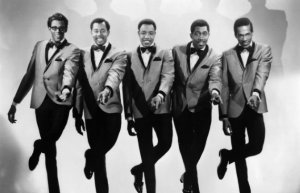
By March 1965, it had reached No. 1 on the Billboard Hot 100, giving The Temptations their first American chart-topper. It became one of the defining songs of Motown’s golden era.
But its story didn’t end with the original release.
The song continued to grow in popularity across generations.
Parents played it for their children.
Children eventually grew up and played it for their own families.
It appeared in movies, television shows, commercials, weddings and countless personal moments.
And somehow, it never lost its charm.
Part of that comes from how universal the idea is.
You don’t have to know anything about the person who inspired the song.
You don’t have to have lived through the 1960s.
You don’t even have to be a fan of Motown.
All you need is someone who makes you understand exactly what the song is talking about.
That’s why “My Girl” has survived for more than six decades.
It’s not really about a particular decade.
It’s about that feeling of having one person who can make everything seem better.
And perhaps that’s why the song still works so beautifully today.
The world around us changes.
Music changes.
Generations change.
But that feeling doesn’t.
Sometimes one person really can feel like sunshine on a cloudy day.
And when that feeling is turned into a song this unforgettable, it can belong to everyone.