Uncategorized
This girl grew up to commit the most heinous crime in history
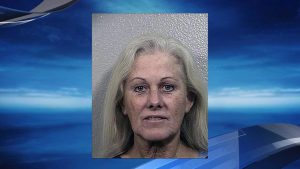
Elizabeth Diane Downs (née Frederickson), born August 7, 1955, in Phoenix, Arizona, became one of America’s most infamous criminals after she murdered one of her children and attempted to murder her other two on May 19, 1983, near Springfield, Oregon. Her case shocked the nation due to the calculated nature of the crime, her bizarre behavior afterward, and her complete lack of remorse. It inspired Ann Rule’s bestselling book Small Sacrifices and a 1989 TV movie starring Farrah Fawcett.
Early Life and Troubled Background
Downs grew up in a strict conservative household. She later alleged childhood sexual abuse by her father (which she later recanted and her parents denied). As a teen, she rebelled against her parents’ rules. She married Steve Downs in 1973 at age 18, partly to escape her family. The couple had two daughters: Christie (born 1974) and Cheryl (born 1976). Downs had an abortion she later regretted, then had a third child, Danny (born 1979), from an extramarital affair after Steve’s vasectomy. The marriage ended in divorce in 1980 amid fights over money and infidelity.
She worked as a U.S. Postal Service carrier in Oregon. According to Steve and others, she showed little maternal instinct and treated her children harshly. In 1982, she gave birth to a fourth child as a surrogate (later adopted out). Before the crimes, she was involved in an obsessive affair with Robert Knickerbocker, a married man from Arizona who did not want children. Prosecutors later argued this was her primary motive.
The Night of the Shooting
On the evening of May 19, 1983, Downs drove her three young children—Christie (8), Cheryl (7), and Danny (3)—on a rural road (Old Mohawk Road). She later claimed a “bushy-haired stranger” flagged her down, attempted a carjacking, and shot the sleeping children before shooting her in the left forearm. She said she faked throwing her keys to distract him, then sped to McKenzie-Willamette Hospital in Springfield.
Cheryl was dead on arrival. Christie suffered a stroke and severe injuries; Danny was paralyzed from the waist down. Downs herself had a relatively minor wound. Hospital staff and police immediately found her demeanor suspicious—she was eerily calm, made inappropriate comments, and focused oddly on her car and vacation plans. Her story had inconsistencies: no blood spatter on the driver’s side, slow driving speed reported by witnesses (contradicting her “high speed” claim), and implausible details like sightseeing at night with sleeping kids.
Forensic evidence and witness accounts dismantled her story. She owned a .22-caliber handgun (matching the murder weapon’s cartridges found at her home). She had called Knickerbocker from the hospital. Christie eventually recovered enough to testify that her mother was the shooter.
Arrest, Trial, and Conviction
Downs was arrested on February 28, 1984. At her 1984 trial in Eugene, Oregon, prosecutors portrayed her as a narcissistic, self-centered woman who viewed her children as obstacles to her relationship with Knickerbocker. Psychiatrists diagnosed her with narcissistic, histrionic, and antisocial personality disorders—one expert called her a “deviant sociopath.” She showed no empathy or remorse, treating the children as possessions.
On June 17, 1984, a jury convicted her of murder, two counts of attempted murder, and two counts of criminal assault. She received life in prison plus 50 years, with parole eligibility after 25 years. The judge emphasized she should never be freed.
Life in Prison and Aftermath
Downs briefly escaped from the Oregon Women’s Correctional Center in 1987 by scaling a fence but was recaptured after 10 days and given extra time. She has been transferred between facilities, including to California. While incarcerated, she earned an associate degree.
Her surviving children, Christie and Danny, were adopted by lead prosecutor Fred Hugi and his wife. Downs gave birth to another daughter (Amy/Rebecca) shortly after her trial; the child was adopted out and later publicly distanced herself from her biological mother, calling her a “monster.”
Downs has repeatedly claimed innocence, spinning varying stories (bushy-haired stranger, corrupt officials, etc.). She has been denied parole multiple times (2008, 2010, 2020, and most recently in late 2025). In October 2025 hearings, she admitted only to “putting them in danger” but maintained she didn’t shoot them. The parole board cited her ongoing mental conditions and danger to others, deferring her next hearing to around 2031 (when she’ll be about 76). Her earliest possible release is listed as 2032.
Legacy and Psychological Interest
The case remains a textbook example of filicide driven by selfish motives rather than mental illness like psychosis. FBI profilers and experts note Downs’ calculated actions, lack of remorse, and personality disorders as atypical for maternal killers. It highlights how some individuals can compartmentalize horror for personal gain.
Decades later, Diane Downs, now in her 70s, remains behind bars with no sign of rehabilitation or accountability. Her crimes continue to fascinate true-crime audiences as a stark reminder of betrayal at its most horrific.